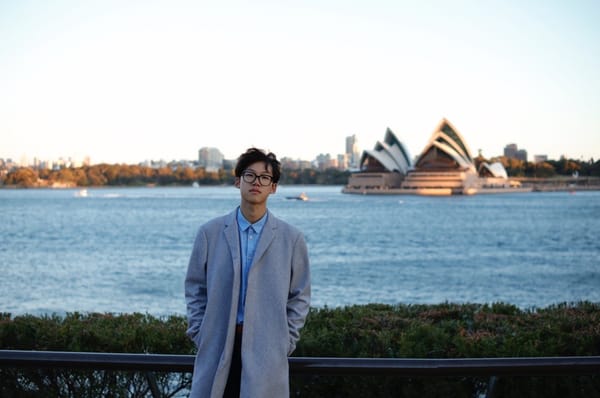
🌱💖 Student Stories - Starting Small, Dreaming Big with Julian

👨🎓 About Julian
Name/Nickname: Julian
University: University of Sydney
Degree: Master of Public Health
Time in Sydney: 3 years
Julian has studied in China, Canada, and now Australia—an international journey that might seem impressive on paper, but he never defines himself by it. Currently pursuing a degree in public health, he has also co-founded a gender equity initiative, joined aged care volunteering, and helped launch a nonprofit platform, not to build a resume, but
“because I believe we can start doing something now.”
As a student, he’s not waiting for the perfect opportunity or a spotlight. Instead, he’s steadily building experience, gathering collaborators, and finding ways to participate meaningfully in society with whatever resources he has.
Q: Can you start by telling us a bit about your study background? You had quite a bit of international experience even before coming to Australia, right?
Julian: Yes, I did my high school in Canada, after studying a China–Canada joint program back home. That was my first exposure to international education. Later, I came to Australia and did my undergraduate degree in Human Resources and Marketing. Now I’m doing a master’s in Public Health.
It might sound like a smooth, straight path abroad, but the truth is, every time I moved to a new country, I had to adjust all over again. Language was part of that, even though I started using English in high school, the way people speak in each country is really different. In Canada, people say “garbage can,” but in Australia you have to say “rubbish bin.” One Canadian dollar is called a “loonie,” and when I first came to Australia and used that word, nobody understood me. These sound like small things, but all the little cultural differences add up and can feel quite overwhelming over time.
And honestly, uni here was a lot more demanding than I expected. When I first started my undergrad, it really hit me. It wasn’t like what people say online, you can’t just breeze through and get good grades. The pressure was real. So even though my background looks okay on paper, coming to Australia meant going through a whole new round of adjustment and figuring things out from scratch.
Q: What made you switch to Public Health? When did you realise that was the direction you wanted to take?Julian: I studied Human Resource Management and Marketing in undergrad, both business-related fields. Back then, I was already quite interested in “people.” Whether you want to start a business or lead a team, understanding, managing and motivating people is something you can’t avoid. Marketing also helped me see things more broadly. It exposed me to areas like branding, product development, and digital communication, which I found really interesting.
But after the pandemic, I started to rethink where these skills could be applied. I realised that public health is actually deeply connected to people too, things like policy design, health education, and community-based programs all require a good understanding of human behaviour and needs. And since I’ve always cared about social issues, this felt like a direction where I could bring together everything I’d previously learned.
Public health isn’t just about medicine. It’s more about thinking at a population level. In my current course, we’re learning about health policy in Australia, chronic disease prevention, and how the healthcare system is managed. It feels meaningful to me, and I’ve found that my business background still comes in handy in this space.
Q: Why did you start getting involved in so many volunteer activities while studying? Was it related to your degree or your long-term goals?
I’ve actually been influenced by my family a lot since I was young. My parents don’t work in the nonprofit sector, but they’ve always volunteered. In their spare time, they’d help out in the community or get involved in charity projects. Watching them do that made me think, if I ever had the ability and the time, I should also try to give back in whatever way I can. So for me, it’s never been a question of whether to volunteer, but whether I’m able to.
After coming to Australia, I’ve tried to take every opportunity I can to get involved in volunteer work. For example, I volunteered at the Welcome Desk at Sydney Airport, helping international travelers find their way. Sometimes people lost their passport on the plane and were totally panicking, we guided them step by step to lost and found, helped them contact the airline… Sometimes just giving someone the right information or pointing them in the right direction can take a huge weight off their shoulders. It’s such a real and rewarding feeling.
I’ve also been involved in other projects, like the “Say My Name” event co-hosted by UTS and the City of Sydney, which was about names and identity. I’ve volunteered for environmental group hikes, and helped out at big Chinese community events like Mid-Autumn Festival and National Day celebrations.
Q: What inspired you to shift from volunteering in existing projects to starting your own? Julian: After participating in so many different volunteer programs, I started to realize that I didn’t just want to join what others were doing. I wanted to take initiative and lead something myself. In 2022, I began planning with two young friends, and in 2023, we officially founded a platform called the Global Youth Student & Scholar Association.
Each of us plays a different role. I mainly take care of the organizational structure and external partnerships, while one friend focuses on content and development strategy, and the other handles event operations. Our first focus was gender equality. This is a topic I’ve always cared about personally. For example, in my own family, many of my female relatives are highly educated and capable, but most of them can only reach mid-level positions. Meanwhile, some men with less impressive backgrounds end up in much higher roles. That made me realise gender inequality isn’t just an abstract issue. It’s something that happens around us all the time.
It’s not an easy topic to work on, especially because I’m a man. Sometimes people misunderstand my intentions or think I’m trying to create conflict. But I believe that being a man is exactly why I should speak up. If people in more privileged positions choose to stay silent, it becomes even harder for women’s voices to be heard. I’m willing to take on that pressure, because I believe this is part of what it means to truly push for social change.
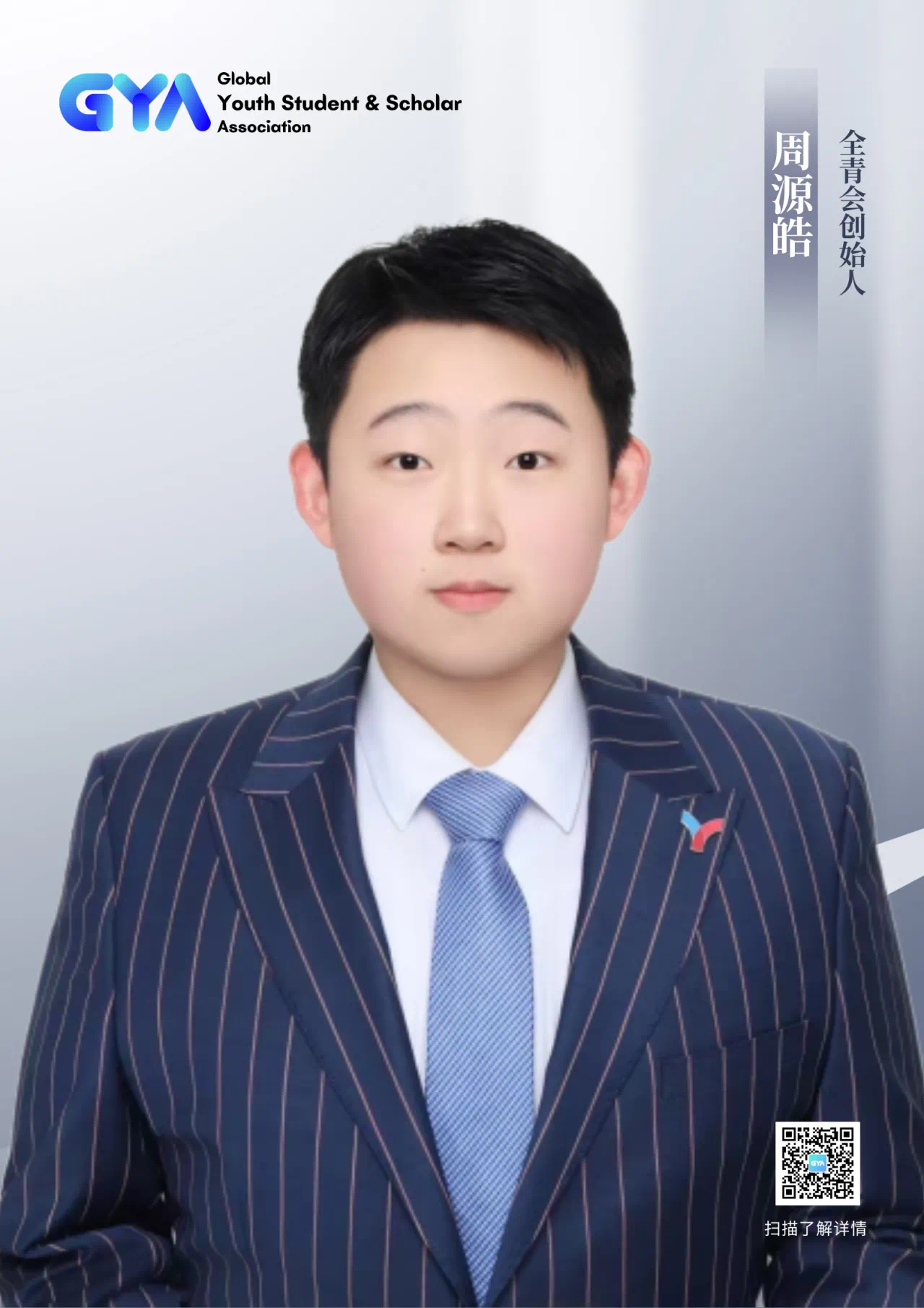
Q: How does the Global Youth Student & Scholar Association operate now, and what goals are you working toward? Julian: We started by publishing content on WeChat, focusing on educational posts, opinion pieces, and case studies from a youth perspective. Over time, we began expanding offline, organizing talks, international student sharing sessions, and youth leadership forums. We’ve invited NGO workers, entrepreneurs, and student leaders to speak about their experiences. The goal is to show people that speaking up and taking action on social issues doesn’t require you to already be successful. You can start where you are.
What we hope to build is a platform that serves as an entry point for young people to ask themselves, “What can I do?” Whether you're still in university, just graduated, or already working, as long as you’re willing to get involved, there’s a place for you.
Q: Apart from the Global Youth Student & Scholar Association, have you been involved in or led any other projects? And what are your future career plans? Julian: Yes, I have. Recently, I’ve been working with a few close friends on a public welfare project that focuses on supporting elderly and disabled communities in parts of China. These groups are often overlooked when it comes to daily care, cognitive health, and social connection. We’re exploring small, practical interventions to help improve their quality of life.
For example, during my recent break in China, I took part in a cognitive training program that recreated a mock market setting. We gave participants Monopoly-style money and had them practice basic calculations, like “What’s 20 minus 6?” It might sound simple, but it’s actually a way to help them maintain their arithmetic skills, slow memory decline, and even delay conditions like Alzheimer’s. These kinds of grounded, hands-on experiences really connect with what I’m studying in public health, and they feel very meaningful to me.
Looking ahead, I’m planning to register a culture-related company in China. It’ll have some commercial aspects to support itself financially, but I also want it to keep supporting the kinds of nonprofit projects I’ve been working on. Ideally, I want to strike a balance, building something that’s sustainable while staying true to the original motivation of contributing to society.
Q: You mentioned you're working on bringing an international environmental organization to Australia. How did that start?Julian: Yeah, this project actually started when I got involved with an environmental organization based in the United States. At the time, they organized a hiking event in Sydney, and I happened to have the opportunity to take part as one of the organizers. It was my first time getting deeply involved in an international initiative focused on environmental issues. It helped raise awareness about the environment and also got me thinking about the connection between sustainability and youth participation.
Later, I reached out to a U.S. nonprofit that focuses on youth leadership because I wanted to bring it to Australia in a more formal way. Right now, I am talking with a few classmates about setting up a student society that could become the organization’s first branch in the Asia-Pacific region. We plan to focus on youth leadership and also include topics like environmental protection, employment, and other social issues. Our goal is to build a platform where young people can take real action.
This nonprofit already has chapters at many universities across the U.S., and I hope this can be a way for us to connect with international practices and ideas around environmental work. One of my public health professors once said that many of the most innovative ideas in healthcare and sustainability have come through global collaboration. So for me, this is both a learning experience and a way to create something meaningful. It is about supporting local students and also finding ways to contribute to global sustainability goals.
Q: You're juggling study, volunteering, NGO projects, and even planning a startup. Do your family support you? Have you ever thought about giving up? Julian: To be honest, my parents weren’t very supportive at first. They thought I should just focus on my studies during uni and couldn’t understand why I was spending so much time on “social stuff.” Back when I was an undergrad, they even said, “You haven’t even finished your degree yet, why are you worrying about all these other things?” They’ve done some volunteering themselves, but for them, volunteering is something you do when you’ve got spare time, not something a student should invest so much energy into.
But for me, it’s never been about volunteering just for the sake of it. I really believe there are things I can and should do. Topics like gender equality or elderly care, these are issues I’ve personally seen in real life. I can’t just pretend they don’t exist. So even when it gets overwhelming, I keep going. Over time, I think my parents started to see that I wasn’t just playing around, I was really committed. These days, they still tell me not to overwork or to watch my grades, but I think they’ve started to accept the path I’ve chosen.
There were definitely moments of doubt, especially when everything piled up and I felt stretched thin. But every time I think about what I’m trying to build, or the people around me who are also working hard in their own ways, it helps me keep going. I don’t believe we have to wait until we become some kind of “successful person” to care about the world, we can start now, from where we are, and do what we can.
Q: You’re already running your own projects. What advice would you give to students who want to start a business or build their own brand? Julian: One thing I’ve really learned is how important it is to have the right co-founders. You need to find people who share your values and are willing to build things with you, not just say yes to everything, but challenge you when needed. They should be able to call out problems, have tough conversations, and work through disagreements with you. That kind of partnership takes time to find, but it’s worth waiting for. You’re not going to go far alone.
Another piece of advice is: don’t rush into registering a company. Even if you have a strong business idea, I’d recommend starting with research and small projects first. Don’t assume that setting up a company should be step one. The reason we eventually registered ours was because we’d already discussed both the best-case and worst-case scenarios, and we had real plans for how to move forward. It wasn’t just a spontaneous decision.If you’re serious about doing something long-term, take it one step at a time.
What you’ve heard so far is only one side of Julian.He shared that after moving through different countries for years, one of the hardest things has been building deep friendships. University is not like high school—once a class ends, everyone goes their separate ways. Many friendships end before they even begin.
In his social circles, people are already deep into research, joining competitions, starting companies. That makes him anxious too, wondering if he’s doing enough or if he’s somehow falling behind. He said it’s not that he has no friends, but he’s still searching. Searching for people he can talk about big ideas with, people who are not just fun to hang out with but also willing to build something together.
Aside from these invisible pressures, he also deals with the everyday stuff. Not liking the taste of food. Feeling a sudden wave of homesickness. Trying to fly back to China during every possible break just to reset.
🎧 Listen to the full 30min recording (in Chinese) below.