🌀💪 Student Stories - Handling Everything with Harrison

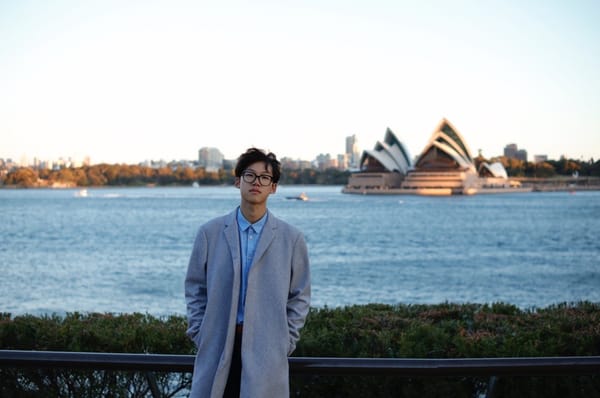
🧑🎓 About Harrison
Name/Nickname: Harrison
University: University of Sydney
Degree: Master of Linguistics
Time in Sydney: 2 years
Harrison is a postgraduate student at the University of Sydney, studying Applied Linguistics. He came to Australia with close friends, had support when he landed, and spoke fluent academic English. But when it came to finding his first part-time job, things weren’t that easy.
“I sent out applications for two or three months and didn’t get a single interview,” he says. “A lot of employers just hear you're on a student visa and stop replying.”
In this conversation, Harrison shares the quiet struggles behind building a life in a new country — from language barriers to working rights — and how those small, difficult moments helped him become more confident and independent.
Q: How was it when you first arrived in Australia? Was anything hard to adjust to? A: I was actually pretty lucky. I came with a friend from middle school. He had already been studying in Australia and flew with me from China. When we landed, he helped me with everything like getting a SIM card, opening a bank account, and figuring out how to get around. I also shared a place with my old university roommate, so I didn’t feel very alone at the start.
But the language barrier was real. Even though I study linguistics, the way people speak here is completely different from what we learn in textbooks. The speed, the accent, and the tone made it hard to understand. I remember trying to get a phone plan and not understanding anything the staff said. In the end, I had to ask someone who spoke Chinese to help me. That moment really stayed with me. It made me realize I had a lot more to learn.
Q: Was it difficult to find a job as an international student? How did you get your first one? A: It was honestly very difficult. After my first semester, I started looking for part-time work. I sent out applications for two or three months and didn’t get a single interview. Most places didn’t even reply. At first I thought maybe I wasn’t good enough, but later I realized it was because of my visa. Many employers won’t consider international students because we can only work 48 hours every two weeks.
I was getting pretty discouraged. Then one day, my roommate said, “Do you want to come work at the restaurant I’m working at?” I said yes, and just like that, I got the job. No application, no interview. It was a Japanese restaurant, owned by Chinese people. Everything was legal, with proper tax and super. That became my first real job in Australia.
Q: What did that job mean to you? A: More than just money. Of course it helped cover my daily expenses, although my parents still had to pay for rent. But what really mattered was the feeling that I could support myself. That small step gave me a lot of confidence.
Q: Did you get involved in anything outside of study and work? A: Yes, I started volunteering and going to local community events. I met people from many different backgrounds and slowly moved out of the little circle of only hanging out with Chinese friends. At first I was a bit shy about speaking to locals, but those activities helped me feel more included and more comfortable speaking English.
Q: Was there a time when you felt really overwhelmed? How did you get through it? A: Definitely. There was one semester when I had a lot of assignments while also working part-time. If I didn’t manage my time properly, things got chaotic very fast. Even wasting a couple of hours on my phone could mess up the whole week. But through that, I learned how to plan better and stay focused. Looking back now, I feel proud that I made it through.
Q: Do you usually tell your parents when something goes wrong? A: Not really. I tend to only share the good things. For example, I once got robbed while traveling in Tasmania. I didn’t tell them at the time because I didn’t want them to worry. I waited until I went back to China and told them face to face. I think that’s part of becoming more independent. You learn to handle things on your own without making your family stress about it.
Q: What have you gained the most from this experience abroad? A: Independence and confidence. I learned how to take care of everything myself, from finding a place to live to fixing broken stuff and dealing with unexpected situations. I also stopped being afraid of speaking up, even if my English isn’t perfect. I know I can figure things out, even when it’s hard.
Q: What would you say to international students who are just arriving in Australia? A: Don’t stay in your comfort zone. Go out, join activities, and meet people. You never know what kind of opportunity or change you might find just by stepping outside. Studying abroad is not easy, but every struggle is a part of your growth. You’re stronger than you think.
How do you build confidence in a place where even everyday English feels unfamiliar?In the full version of our interview, Harrison shares how he slowly got comfortable saying “I don’t understand” in conversations, and how volunteering gave him his first real sense of participation. He also talks about being naturally introverted — “an i-person,” as he says — and learning to open up by being around people who bring out another side of him.
🎧 Listen to the full 23 min recording (in Chinese) below.