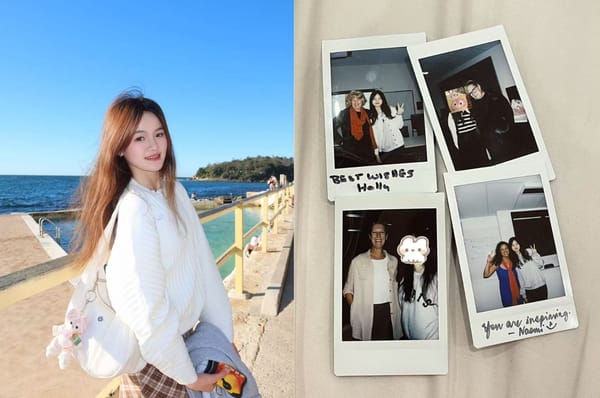
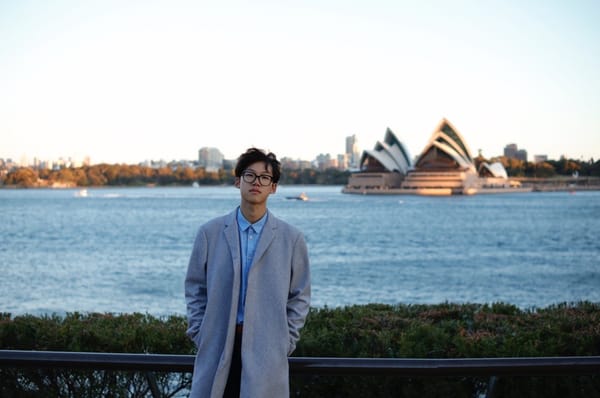
💻💼Student Stories - Stay or Go? Jocelyn’s Crossroads in Sydney
From navigating cultural shocks to building technical depth, from struggling in silence to finding belonging through community, Jocelyn’s journey is not about dramatic leaps, but about continuous, conscious change.

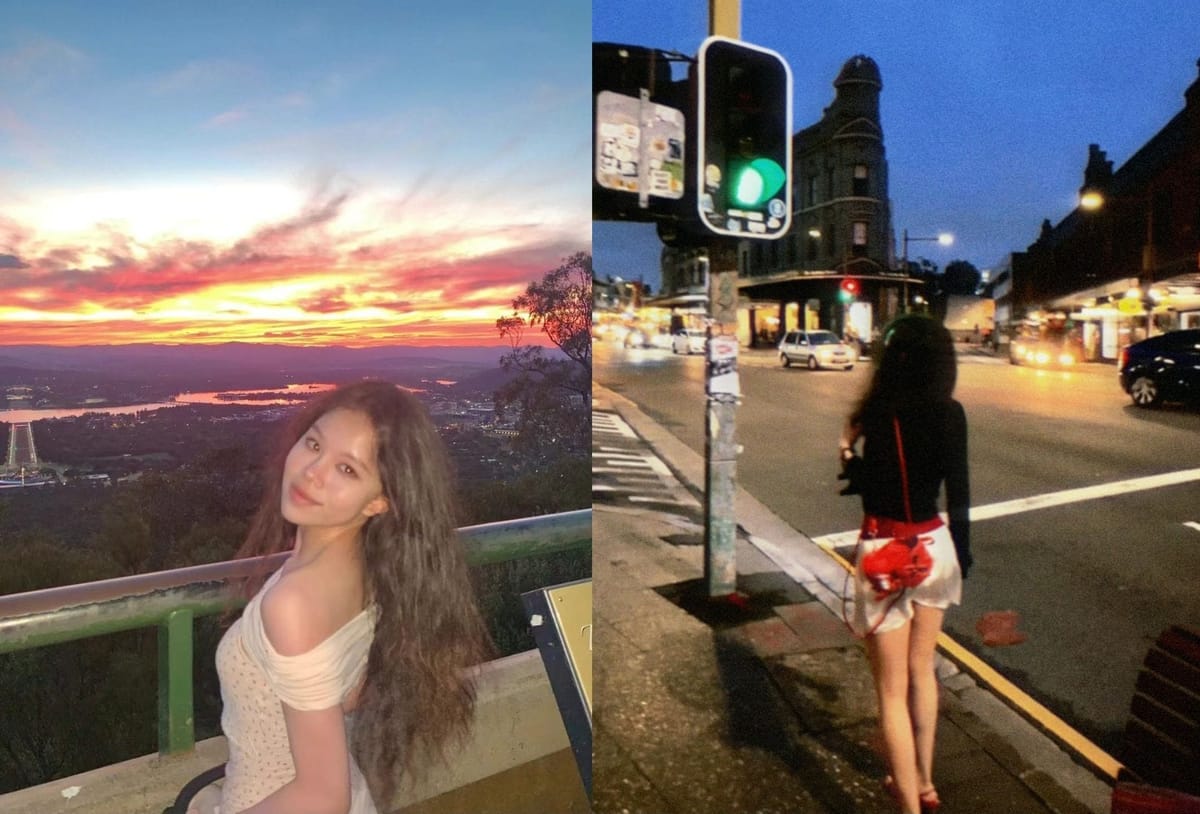
“I didn’t always know I would stay. But the more I understood both sides, the clearer the answer became.”
In the past two years, Jocelyn has undergone a quiet but powerful transformation. As a Master’s student in Computer Science at UNSW, she arrived in Sydney alone with no family, no friends, and little idea of what lay ahead. But instead of letting uncertainty paralyze her, she chose to face it, adapt, and reflect. From navigating cultural shocks to building technical depth, from struggling in silence to finding belonging through community, Jocelyn’s journey is not about dramatic leaps, but about continuous, conscious change. And at the center of it all lies a single, deeply personal question: do I stay, or do I return? Her story traces how she navigated solitude, self-definition, professional and personal growth, and ultimately how she confronted the biggest decision any international student must face: where to build a new life.
Let’s trace how Jocelyn navigated solitude, self-definition, and one of the biggest decisions any international student must face: where to build a life.
👩🎓🎥 About Jocelyn
Name: Jocelyn
University: University of New South Wales (UNSW)
Degree: Master of Computer Science (currently in her final semester)
Time in Sydney: Almost 2 years
First Landing: Independence by Necessity
Jocelyn’s story begins with a flight from Beijing to Sydney in late 2023. Like many international students, she had no family in Australia and traveled completely alone. “My friends didn’t come to Sydney either, so I did everything by myself,” she recalls. Finding a roommate through Xiaohongshu became her first safety net. “At that time, even having a ‘normal’ roommate felt like a stroke of luck.”
The first few weeks in Sydney were overwhelming: sorting out IDs, phone numbers, public transport cards, and navigating everything in a second language. “Simple daily English was fine,” she says, “but whenever someone used jargon or spoke fast, I got lost.”
Daily life was also a crash course in adulting. “In China, you forget something and someone can help. Here, if you miss something, you are on your own.” However, that early challenge became the foundation of her independence.
“There was no one else I could rely on, I needed to become the person I can rely on.”
Finding herself in a Technical World
Jocelyn studied Computer Science during her undergraduate degree in China and chose the same field at UNSW. What she wasn’t prepared for, however, was how much more intense and practical the program would be.
“Back home, you could cram for the exam and memorize concepts. Here, the exams are mostly coding-based. If you can’t solve a live problem on the spot, you fail. That kind of pressure forces you to really learn.”
Each term brought many large projects, each demanding weeks of consistent effort. “There’s no real ‘honeymoon phase’ here,” she laughs. “Assignments start in Week 1 and just never stop.”
But she never questioned her decision to pursue a technical path. “I wanted something difficult. I wanted to build skills that are real and measurable.” She didn’t want to just study something useful; she also wanted to become someone capable.
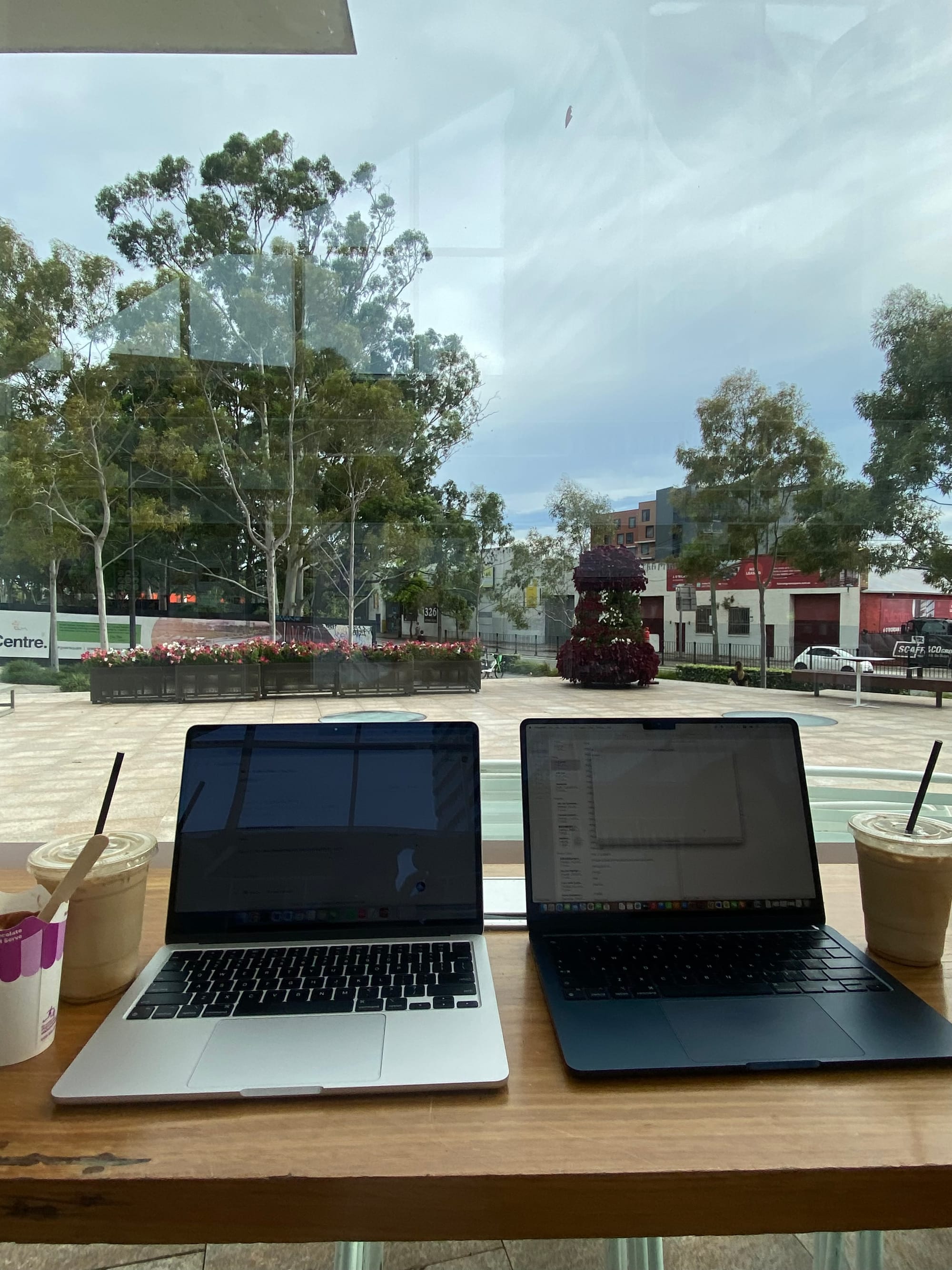
Finding Belonging Through Community
As the academic pressure stabilized, Jocelyn started exploring ways to feel more connected. “At first, I thought I didn’t need a lot of friends. But after a while, I realized you need a sense of home even if it’s temporary.”
She joined the Chinese Students Association at UNSW, working specifically in the career development team. “I liked that I could help others look for jobs while also learning by myself,” she says. Outside of school, she took on multiple part-time jobs from hospitality to customer service at a rental company.
“I chose my second job based on one criterion: I wanted to sit down all day,” she laughs. But the real takeaway, she says, was the atmosphere. “A supportive work culture means everything. Even if the pay is lower, if the team is kind and supportive, the job is much more tolerable.”
Stay or Go?
Jocelyn didn’t arrive in Sydney with a clear plan to stay or go, so she needed clarity. Over countless evenings spent comparing spreadsheets and late-night phone calls with friends back in Beijing, four truths emerged that guided her decision.
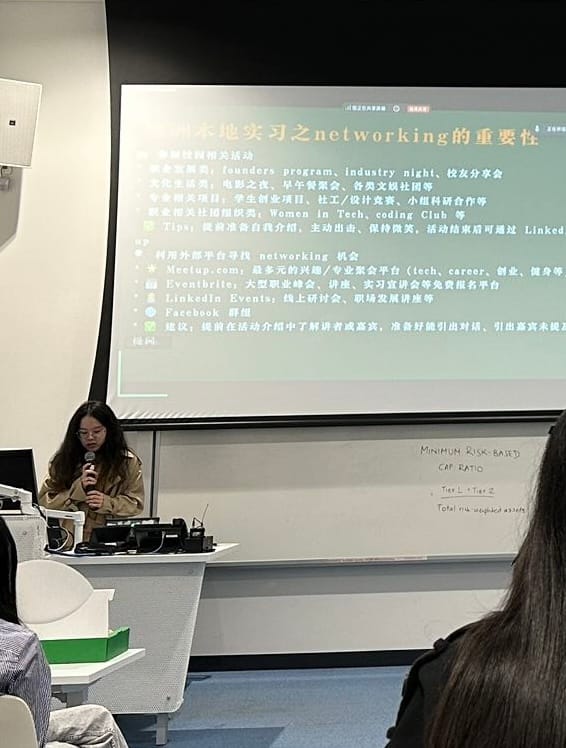
When she sketched out the career pathways, the contrasts were stark. “In China’s big tech companies, people routinely work until 10 or 11 p.m. every day,” she says, recalling what her peers described. In Sydney, by contrast, UNSW’s Career Development Centre and the alumni-driven Founders program transformed each course project into a potential job lead. Networking dinners, CV workshops, and startup pitch nights made her realize she could build a steadier career here: one where she could grow her GitHub portfolio without sacrificing her evenings.
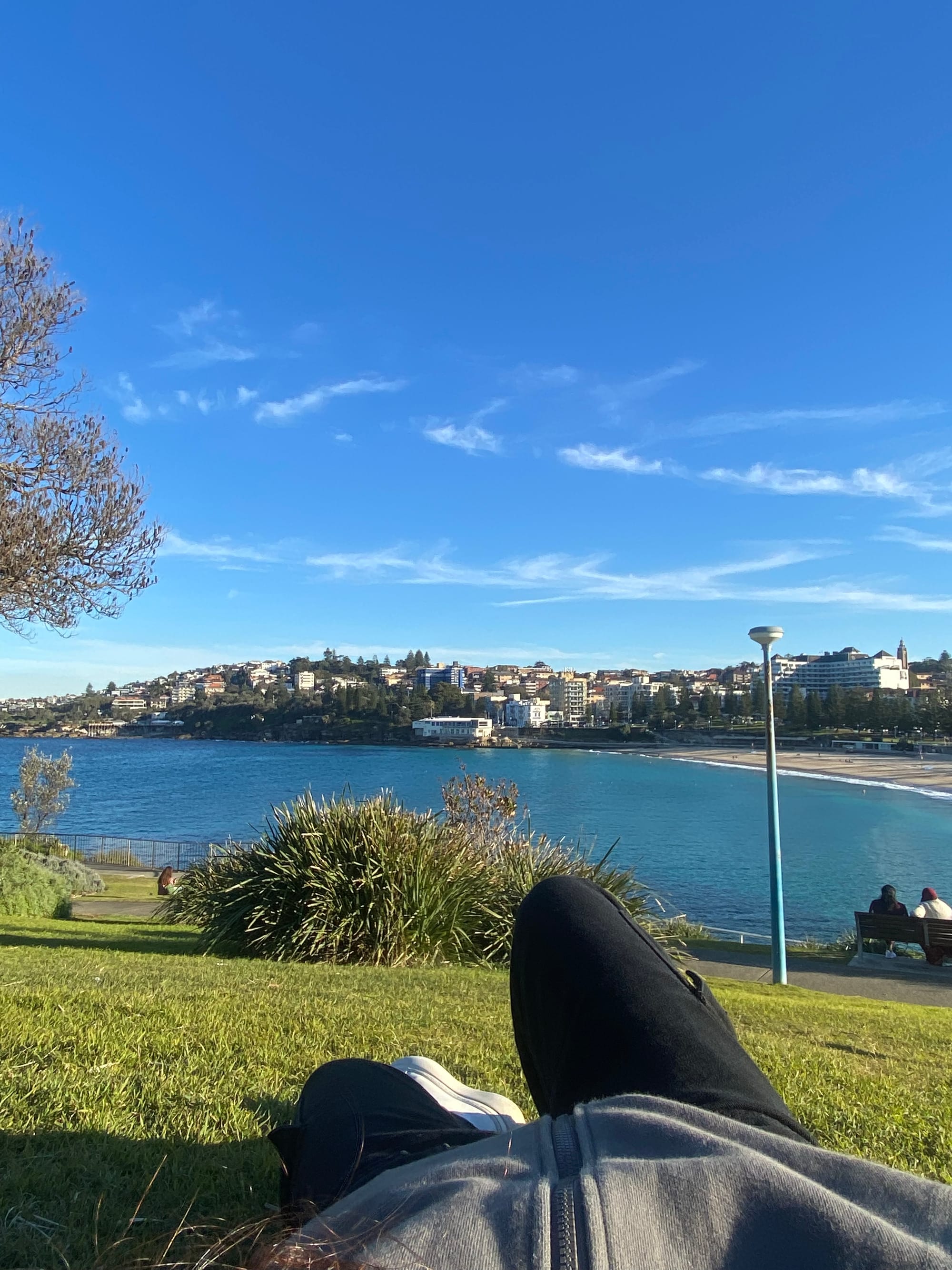
Next came well-being, an element she once thought secondary but soon recognized as essential. She mapped out a typical week: early finishes at 5 p.m., yoga classes by the harbour, weekends at Bondi Beach. “Here, I found I didn’t need so many material things,” she reflects. “People’s spiritual needs are met, and life feels simpler.” Back in Beijing, her friends’ social calendars were eclipsed by overtime and exam-style coding sprints, a pace she no longer wanted to endure.
The financial implications were harder to quantify but difficult to ignore. “Sydney’s living costs are really high,” Jocelyn admits. Rent, groceries, utilities, visa fees, they would consume a large portion of her graduate salary. But Shanghai’s cheaper rent and higher starting pay promised greater savings at the expense of downtime. Unfortunately, her three-year financial projection showed that “financial security” and “personal fulfillment” weren’t always possible at the same time. .
Finally, she examined long-term residency options. In Australia, post-study work visas offer two to three years of employment, with clear pathways to permanent residency for STEM graduates. “Even if I get PR later, I’ll have another route,” she tells herself. In China, the intense competition offered prestige, but far fewer formal routes to settle independently.
In weaving together these strands: career opportunity, well-being, financial reality, and residency security, Jocelyn’s choice crystallized. She wasn’t fleeing home, nor blindly embracing a foreign shore; she was aligning her values with clear, pragmatic steps. As graduation nears, she faces the future with the calm confidence that, whichever path she follows, it will be her choice.
Sometimes, knowing is enough
Jocelyn’s journey doesn’t end with a visa or a job offer. It ends with clarity. Clarity about what kind of life she wants to live, what values matter to her, and how to act on that knowledge. She isn’t staying in Australia because it’s easy. She’s staying because it makes sense for her, right now, at this stage of her life.
“It’s not about which place is better. It’s about which path fits the version of me I want to be.”
And that, perhaps, is the truest form of growth: not chasing certainty, but becoming certain enough to make your own decision.