📖📱Student Stories - From English Literature to Digital Media: Ziyi's Challenger Path in Australia
What happens when curiosity meets courage? For Ziyi, the answer is reinvention. Originally majored in English Language and Literature, Ziyi made a bold leap into digital media: not just in subject matter, but across cultures, learning styles, and professional expectations.

What happens when curiosity meets courage? For Ziyi, the answer is reinvention. Originally majored in English Language and Literature, Ziyi made a bold leap into digital media: not just in subject matter, but across cultures, learning styles, and professional expectations.
Ziyi’s journey is about more than just earning a degree. Through hands-on learning, self-directed growth, and storytelling across personal platforms, she’s built a new identity as a cross-disciplinary challenger and self-media storyteller.
From late-night editing in Sydney to mentoring new international students, Ziyi’s path proves that passion matched with persistence can be powerfully transformative.
👩🎓🎥 About Ziyi
Name: Ziyi
University: University of Sydney
Degree: Master of Digital Communication and Culture
Time in Sydney: 1.5 years
Starting from Scratch in New Environment
Before coming to Sydney, Ziyi had already sensed a misalignment between her English major background and the job market in China. “I was realistic,” she says. “The English-teaching field in Shenzhen was saturated, and I knew I wasn’t at the very top academically. I needed something more.”
That “something more” wasn’t chosen on a whim. With a long-standing interest in photography, video editing, and social media storytelling, Ziyi began thinking seriously about turning that personal passion into a professional skillset. The Master of Digital Communication and Culture at the University of Sydney seemed like the perfect leap: creative, cross-disciplinary, and future-facing. But the leap came with challenges. The first major challenge was the shift in disciplinary language and logic. “I had never studied communication theory or media analysis before, and suddenly I was expected to talk about things like semiotics, cultural capital, or branding strategies,” she recalls.
Also, everything was delivered in academic English. Despite having studied English Language and Literature as an undergraduate, Ziyi still found herself unprepared for the full immersion of a Western classroom. “It wasn’t just the language; it was the way of thinking that was different,” she explains. “Sometimes in tutorials, I didn’t even understand what the questions were really asking.” What caught her off guard wasn’t grammar or vocabulary, but the real-world diversity of spoken English such as accents, speeds, tones. “Back in China, we mostly dealt with textbook English that is clear, slow, and standardized,” she says. “But here, every lecturer had a different accent, and some spoke really fast. At first, it was overwhelming.”
When asked how she managed that transition, Ziyi didn’t hesitate. “I went through every week’s outline on Canvas, read the readings, made notes, and then watched the lecture recordings again. I would cross-reference the readings with what the lecturer said until it made sense.” It was a painstaking process, but it gave her a foothold.
The turning point came when the coursework shifted from theory to practice-based learning. In some units about video editing and digital magazine design, instructors assumed no prior experience. “They really taught everything from scratch, so I didn’t feel left behind,” Ziyi says. “Once I finished my first video assignment, I thought, maybe I really can do this.”
That moment, she says, reshaped her mindset.
“I didn’t have a media background, but I had the willingness to start from scratch, and that made all the difference.”
Rather than being at a disadvantage, starting from zero became the very thing that taught her how to learn in new ways, to trust the process, and move forward with confidence—even in unfamiliar territory.
Stepping into the Real World with Confidence
After a year of adjusting to new academic frameworks and slowly building confidence through practice-based learning, Ziyi faced the final and perhaps most high-stakes decision of her degree: whether to complete a research project or undertake an industry internship. Both options would fulfil the program’s capstone requirement, but the paths looked very different.
“I knew the research stream would be more stable,” she says.
“You could control the pace more. But I really wanted hands-on, real-world experience: something that pushed me beyond the classroom.”
That choice came with uncertainty. The internship stream was selective, open only to students who had completed at least three core units with a grade above 70, and passed a diagnostic test. Even after being accepted, success wasn’t guaranteed. Students were responsible for securing their own placements from a curated list of industry partners. “It was more of a try-your-luck kind of thing,” Ziyi recalls. “I told myself I’d try, even if it didn’t work out.”
What followed was a humbling test of patience. “Getting the internship was harder than I expected,” she says. She started early, tailoring her cover letters for each role, polishing her resume again and again. But most companies didn’t reply. A few sent rejections. When asked what the hardest part was, there was no hesitation: “It was the waiting. The uncertainty. You start questioning everything: Am I not good enough? Is my English not professional enough? What am I doing wrong?” There was a moment when she seriously considered giving up. “I thought maybe I should just switch back to the research option. But deep down, I knew I came to Australia to challenge myself. If I quit halfway, I’d always wonder what I missed.”
Eventually, two offers came in. One was from a company with a largely Mandarin-speaking team and a familiar working style. The other was from a global communications English-speaking agency. “I was torn,” she says. “The first one felt safe, but the second was clearly more aligned with what I wanted to do in the future, even if it scared me.”
She chose the harder road. From day one, it was clear this wasn’t a university tutorial. “There were no step-by-step instructions,” Ziyi explains. “You’re given a brief, sometimes just a topic and a timeline, and you have to figure it out. In meetings, she was the only Mandarin speaker, and everything moved fast. “In class, you can plan your words and rehearse,” she says. “In the office, you have to react quickly, express your ideas clearly, and not freeze when someone disagrees.”
One of the biggest mindset shifts came when she realised her university habits weren’t always useful. “As a student, I was used to thinking: just tell me what the teacher wants, and I’ll give it to them,” she reflects. “But at work, there isn’t always a ‘right answer.’ You need to take initiative, make creative decisions, and deal with feedback that isn’t always clear.”
“It wasn’t just about completing tasks. I was learning how to think like a communicator, not just a student.”
At first, this ambiguity was frustrating. “I kept asking myself, ‘Why won’t they just tell me what to do?’” But gradually, she adjusted. She started asking more strategic questions, taking ownership of the process, and accepting that uncertainty is part of creativity. “Eventually I stopped trying to be perfect and started focusing on being useful,” she says. “Once I let go of trying to ‘get it right,’ I actually started getting things done better.”
She also came to appreciate the contrast in workplace culture. “In Australia, people really respect work–life balance. No one expects late-night emails. If you’re sick, you rest. If it’s the weekend, it’s your time. It felt human.”
By the end of the internship, Ziyi had contributed to real campaigns, sat in on brainstorming sessions, and developed a portfolio that reflected not just her creativity, but her growth. Choosing the harder path paid off not because it was easy, but because it taught her that navigating ambiguity is part of becoming a professional.
Finding Belonging Through Exploration and Engagement
While academic adaptation and internship pressure marked the first half of Ziyi’s time in Sydney, the second half brought something just as important: a growing sense of belonging.
One way she found her rhythm was through travel. “I wanted to experience Australia as more than just a student,” she says. And she did exactly that. From snorkeling in Queensland’s Great Barrier Reef to watching the sunrise over Uluru in the Northern Territory, Ziyi made it her mission to explore all six states.
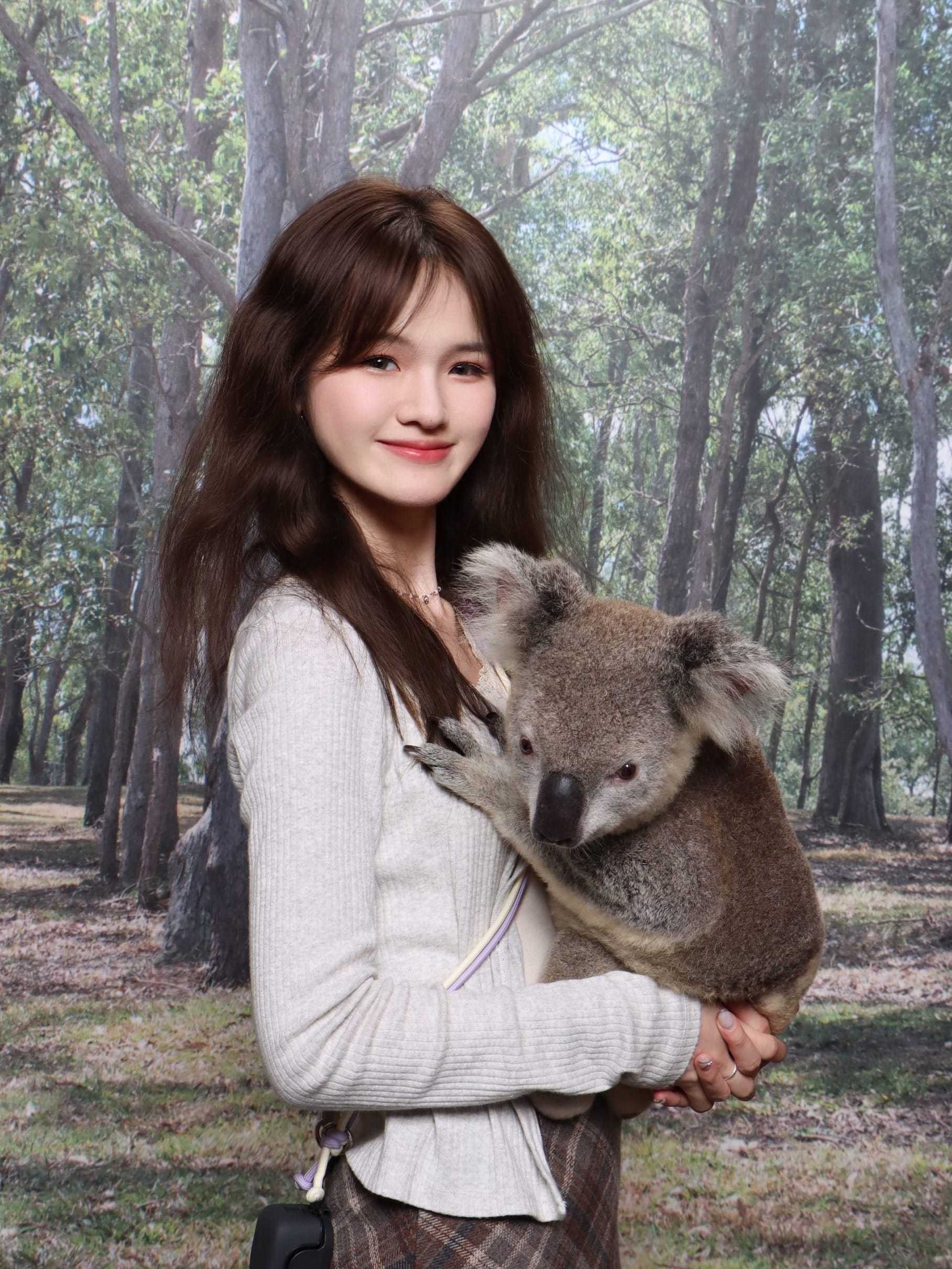
“It was my first time really traveling alone or planning multi-day trips in a foreign country. At first it was scary; but later, I felt free.” Those journeys helped her reconnect with herself outside of university roles. “You start noticing how quiet the sky is, how different people live. It gave me space to think about who I was becoming.”
But Ziyi didn’t just explore outwardly, she also turned her experience into a way to help others feel less lost. As part of the faculty’s mentor program, she volunteered to support incoming international students, many of whom were just as confused as she had been months earlier.
“I started answering questions in the WeChat group before the semester even began: things like how to choose units, or what kind of laptop is best for design students,” she laughs. Once the semester started, her support didn’t stop. She met mentees for coffee chats, gave tips on doing presentations, and checked in weekly to make sure they were adjusting.
When asked why she volunteered, Ziyi pauses.
“Because I remember how hard it was at first. And if I can be the reason someone else feels just a little more confident, then it’s worth it.”
The dual experience of exploring Australia’s vast landscape and supporting others in smaller, day-to-day ways gave her something she hadn’t expected: emotional grounding. “I stopped feeling like I was just passing through. I started feeling like I had a place here.”
Bridging Passion and Profession as a Vlogger
Ziyi’s journey didn’t stop at adapting, interning, or even mentoring; she wanted to shape her own narrative. While she was gaining confidence in academic and professional spaces, she was also building something more personal and lasting: a creative identity that bridged where she started and where she was headed.
From the beginning, her interest in photography and short-form video wasn’t just a hobby; it was one of the reasons she chose to leave English literature behind and pursue digital media. But what’s remarkable is how she managed to transform that early interest into professional competence, and then circle back, using her newly acquired skills to refine and amplify her original passion.
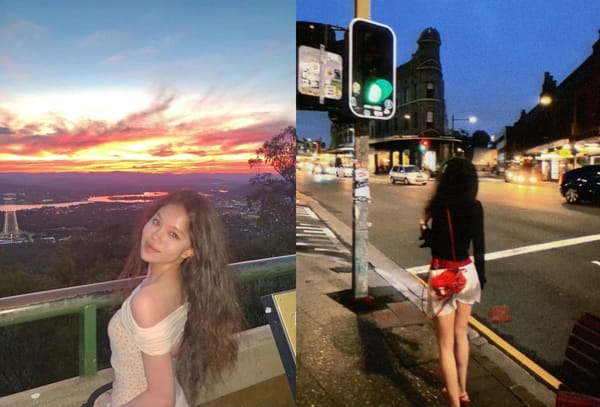
Ziyi began creating digital content about her life in Sydney, not as a commercial influencer, but as a creator experimenting with voice and purpose. She produced vlogs on Chinese platforms like Xiaohongshu and Douyin, covering everything from her interstate travels to moments of growth in her internship experience. “When I look back at the videos I made in my first semester, I can see how much I’ve changed,” she reflects. “I was very cautious at first, always afraid of getting things wrong. But through practice, it started to make sense.”
“I used to think my passion was just a side thing,” she says.
“But now I’ve realised that it can be part of my profession. What I love doing and what I’ve trained for; they don’t have to be separate.”
That realisation gave her a new sense of direction. Looking ahead, Ziyi plans to return to China and pursue a career in digital media, content strategy, or branding, where she can fuse creativity with communication, and theory with practice. She no longer sees her cross-disciplinary background as a detour; it’s her strength.
In many ways, Ziyi’s story is not just about learning a new skillset or adapting to a new environment, it’s about the courage to connect who you are with who you’re becoming. By reframing her creative interests as a viable professional path, and investing the time to build both competence and confidence, she has written a story that reflects not only her resilience, but also her passion.